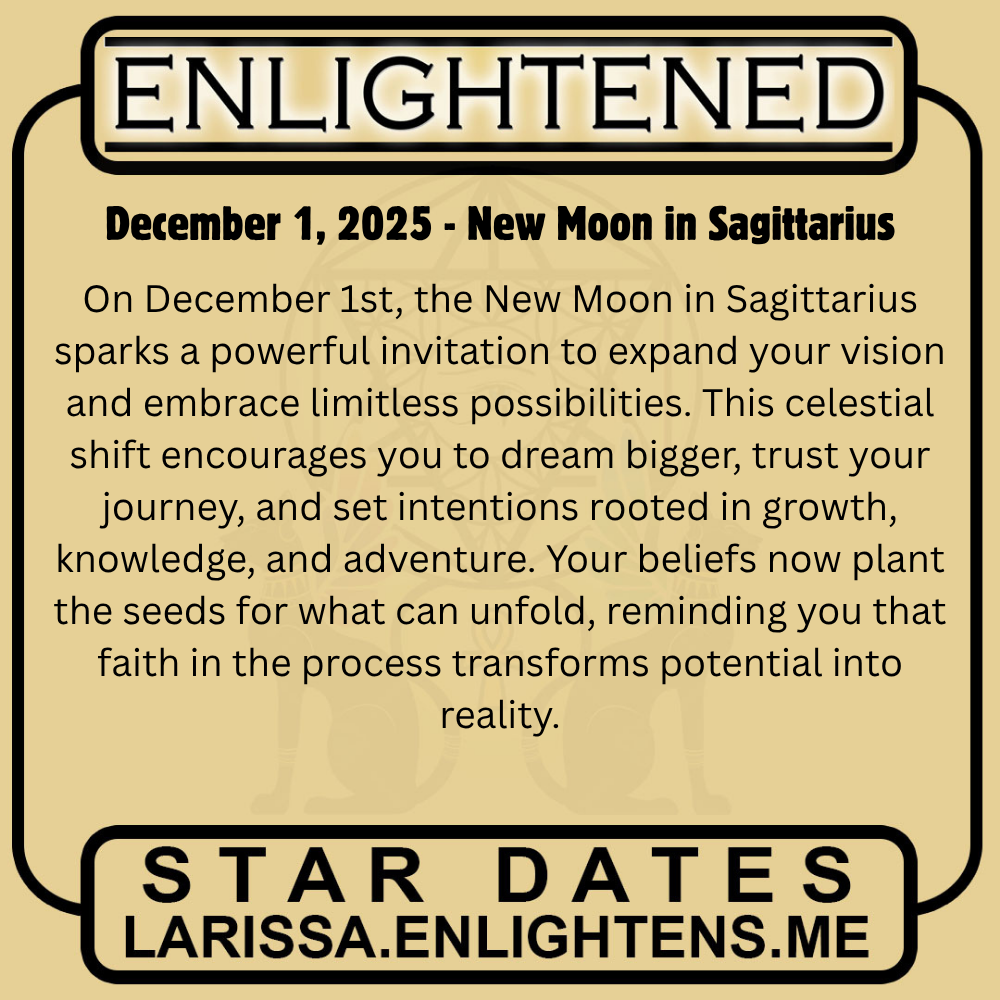
Vision expands. This New Moon on December 1st invites you to dream bigger and trust the journey. Set intentions around growth, learning, and adventure. What you believe now shapes what becomes possible. NEW MOON IN SAGITTARIUS
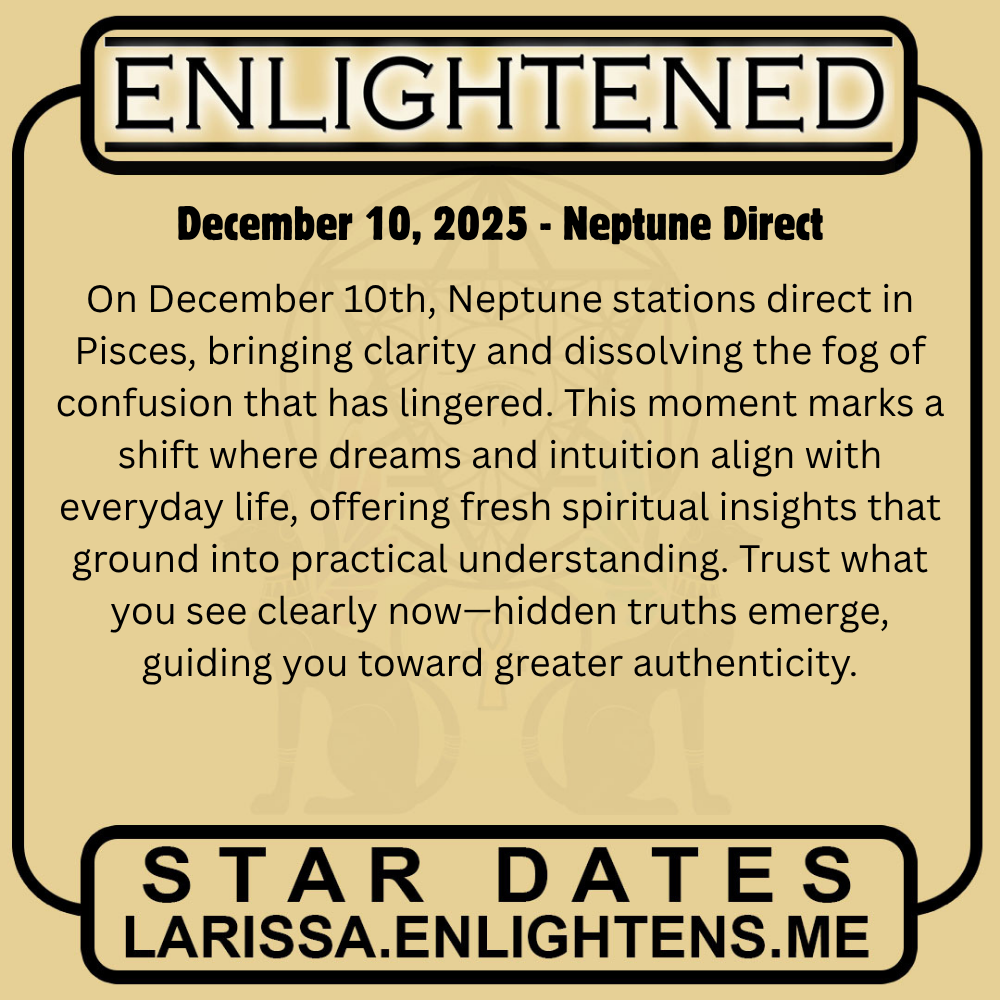
Neptune Direct
Clarity returns. Neptune stations direct on December 10th in Pisces, lifting the veil of confusion. Dreams meet reality as spiritual insights ground into practical wisdom. Trust what you now see clearly. NEPTUNE DIRECT
Full Moon in Gemini
Communication peaks. This Full Moon on December 15th illuminates ideas, connections, and exchanges. Release scattered energy and focus on what truly matters. Clarity comes through conversation. FULL MOON IN GEMINI
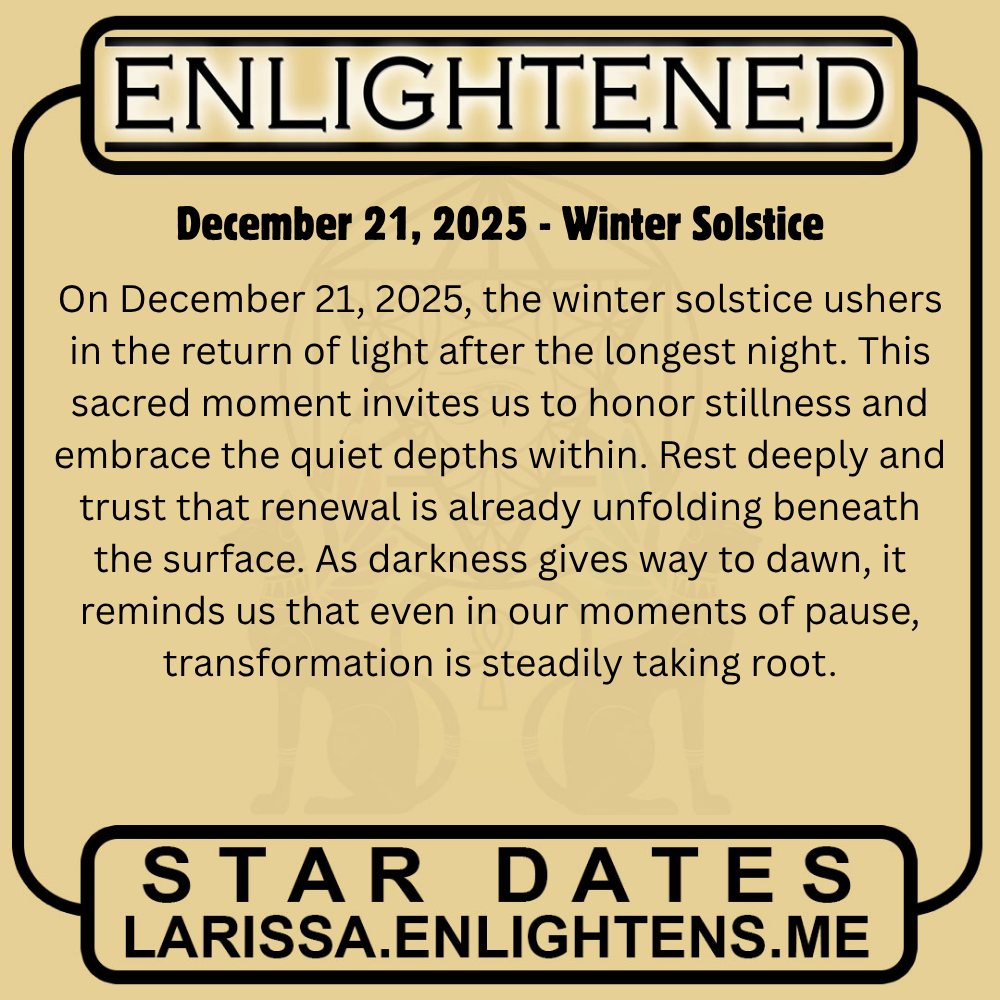
Winter Solstice
The light returns. The longest night on December 21st marks a turning point from darkness into light. Honor the stillness, rest deeply, and trust that renewal is already underway. WINTER SOLSTICE
Sun enters Capricorn
Structure calls. The Sun enters Capricorn on December 21st, inviting discipline and long-term planning. Build foundations that last and trust that steady effort yields lasting results. SUN ENTERS CAPRICORN
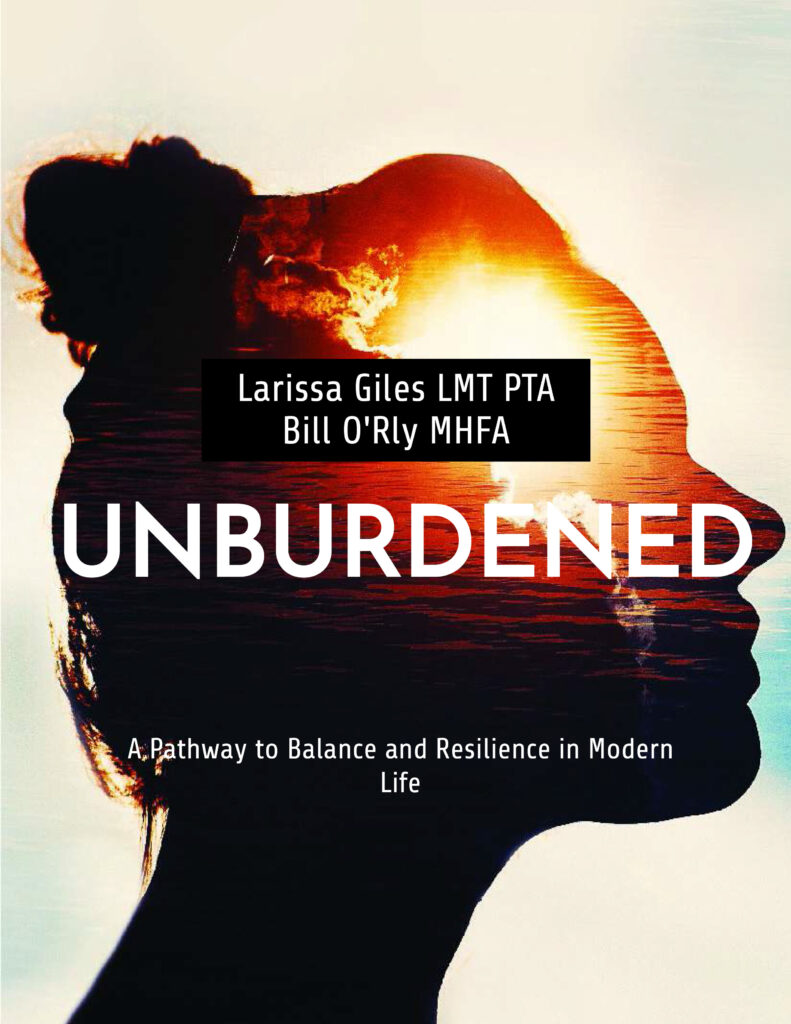
In our culture of hustle and of striving, the concept of balance can often feel like a distant and an unattainable dream. We are taught to push harder, to do more, and to constantly be reaching for the next level of success. But this relentless pursuit of more can leave us feeling depleted, disconnected, and deeply out of balance. In Unburdened: A Pathway to Balance and Resilience in Modern Life, you will discover that balance is not about doing less, but about living with a greater sense of harmony, of purpose, and of well-being.
Defining balance in today’s world is a deeply personal journey. It is not about achieving a perfect 50/50 split between your work and your personal life; it is about creating a life that feels good to you, a life that is aligned with your values, and a life that allows you to thrive in all areas. It is a dynamic and an ever-changing process, a dance between effort and ease, between doing and being.
The impact of imbalance on our well-being is profound. When we are out of balance, we are more susceptible to stress, to anxiety, to depression, and to a wide range of physical health problems. We may feel a sense of emptiness, of meaninglessness, or of being disconnected from our own lives. We may find ourselves going through the motions, without any real sense of joy or of aliveness.
Finding your way back to balance is a journey of self-discovery. It is about getting quiet, about listening to your own inner wisdom, and about making conscious choices that are in alignment with your true self. It is about learning to say “no” to the things that drain your energy, and “yes” to the things that nourish your soul. It is about creating a life that is not just successful on the outside, but that is also rich and fulfilling on the inside.
Are you ready to find your equilibrium in a chaotic world? Download your free copy of Unburdened: A Pathway to Balance and Resilience in Modern Life today at www.enlightens.info and learn to create a life of greater balance, of harmony, and of joy.
In an increasingly complex and demanding world, it’s easy to feel overwhelmed. The constant barrage of information, the pressure of responsibilities, and the sheer speed of modern life can leave us feeling adrift, anxious, and disconnected from our inner selves. When life feels like a relentless tide pulling us in multiple directions, the ability to stay grounded becomes not just a desirable trait, but a crucial skill for maintaining mental and emotional well-being. Groundedness is about finding stability and presence amidst chaos, allowing us to navigate challenges with greater clarity and resilience.
To be grounded means to be fully present in your body and in the current moment, connected to the earth and to your inner core. It’s the opposite of feeling scattered, anxious, or lost in thought. When we are grounded, we can observe our thoughts and emotions without being consumed by them. We can respond to situations thoughtfully rather than reacting impulsively. This state of inner calm provides a stable foundation from which to face life’s inevitable ups and downs, preventing us from being swept away by stress or external pressures. It’s about cultivating an internal anchor that holds us steady.
One of the primary reasons we lose our groundedness is when our minds become overly focused on the past (regret, rumination) or the future (worry, anxiety). We disconnect from the only moment we truly have—the present. Overwhelm often stems from feeling like we have too much to do, too many decisions to make, or too many uncertainties to contend with. By bringing our attention back to the here and now, we can break down large, daunting tasks into manageable steps, address immediate concerns, and regain a sense of control over our experience. This shift in focus is a powerful antidote to the feeling of being swamped.
Practicing groundedness also involves connecting with our physical selves. Our bodies are powerful tools for anchoring us to the present. When we feel overwhelmed, our minds tend to race, but our bodies can provide a point of stillness. Simple physical sensations—the feeling of our feet on the ground, the rhythm of our breath, the texture of an object in our hand—can immediately pull us out of our heads and back into the reality of the moment. This physical awareness helps to calm the nervous system, reduce mental chatter, and restore a sense of inner peace.
Here are some practical steps to stay grounded when life feels overwhelming:
Deep Breathing: When you feel overwhelmed, pause and take five slow, deep breaths. Inhale deeply through your nose, feeling your belly rise, and exhale slowly through your mouth. Focus entirely on the sensation of your breath.
The 5-4-3-2-1 Technique: This is a quick mindfulness exercise. Identify 5 things you can see, 4 things you can touch (and touch them), 3 things you can hear, 2 things you can smell, and 1 thing you can taste. This engages your senses and brings you to the present.
Connect with Nature: Spend a few minutes outdoors. Feel the sun on your skin, the wind in your hair, or the ground beneath your feet. Even looking out a window at a tree can help you feel more connected.
Mindful Movement: Engage in gentle physical activity like walking, stretching, or yoga. Pay attention to the sensations in your body as you move. This helps to release tension and focus your mind.
Physical Anchors: Keep a small, smooth stone or a piece of jewelry in your pocket. When you feel overwhelmed, hold it and focus on its texture and weight. Let it be a reminder to return to the present.
Staying grounded is an ongoing practice, not a one-time fix. By regularly incorporating these simple techniques into your day, you can build a stronger capacity to remain calm, clear, and present, even when life throws its most overwhelming challenges your way. It’s about cultivating an inner sanctuary that you can always return to, no matter how turbulent the external world becomes.
What simple grounding practice will you commit to trying today to find your center amidst the overwhelm?
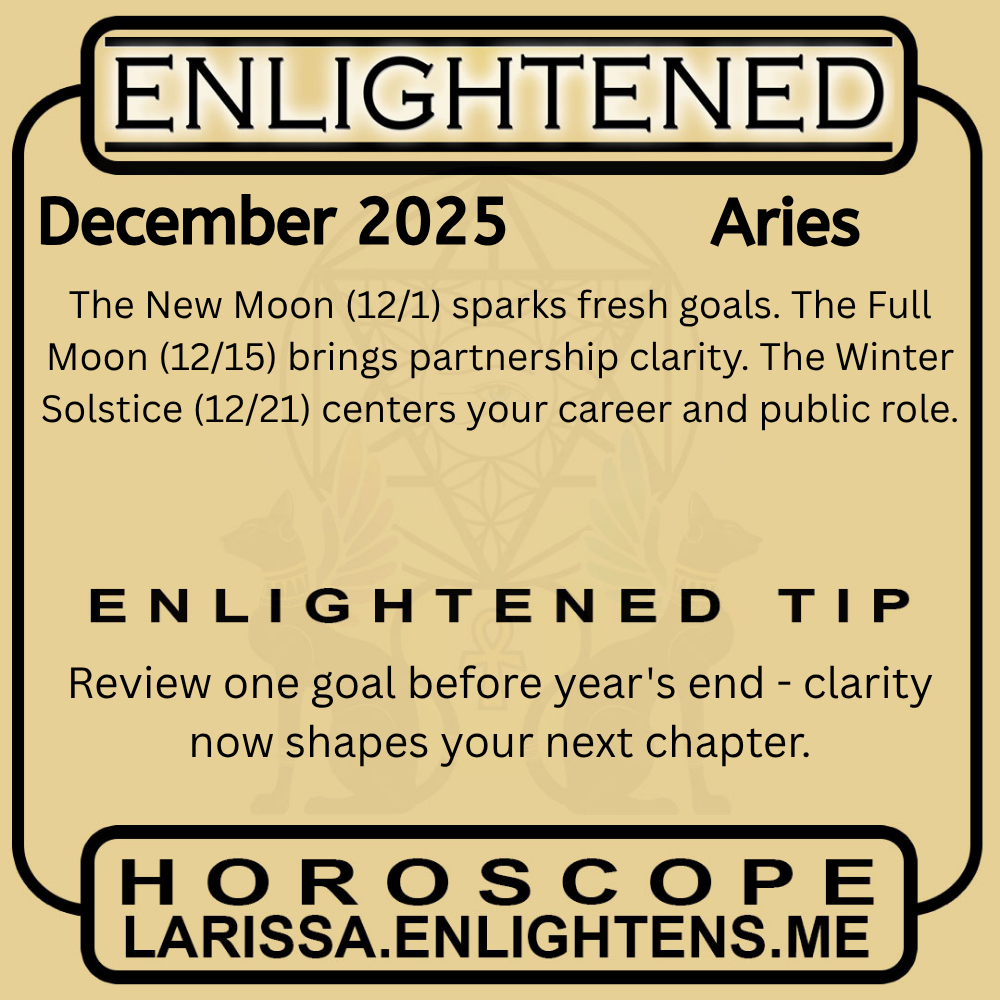
The New Moon (12/1) sparks fresh goals. The Full Moon (12/15) brings partnership clarity. The Winter Solstice (12/21) centers your career and public role.
Enlightened Tip: Review one goal before year’s end – clarity now shapes your next chapter.
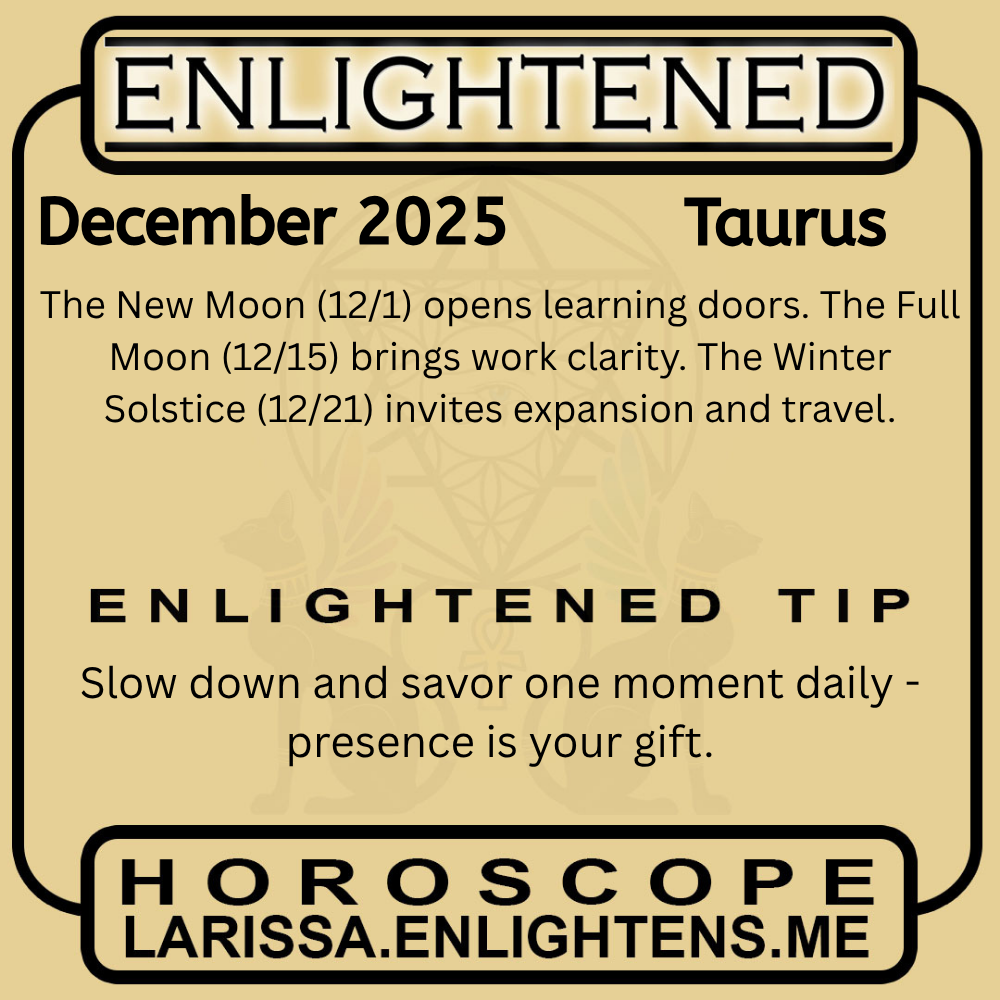
Taurus
The New Moon (12/1) opens learning doors. The Full Moon (12/15) brings work clarity. The Winter Solstice (12/21) invites expansion and travel.
Enlightened Tip: Slow down and savor one moment daily – presence is your gift.
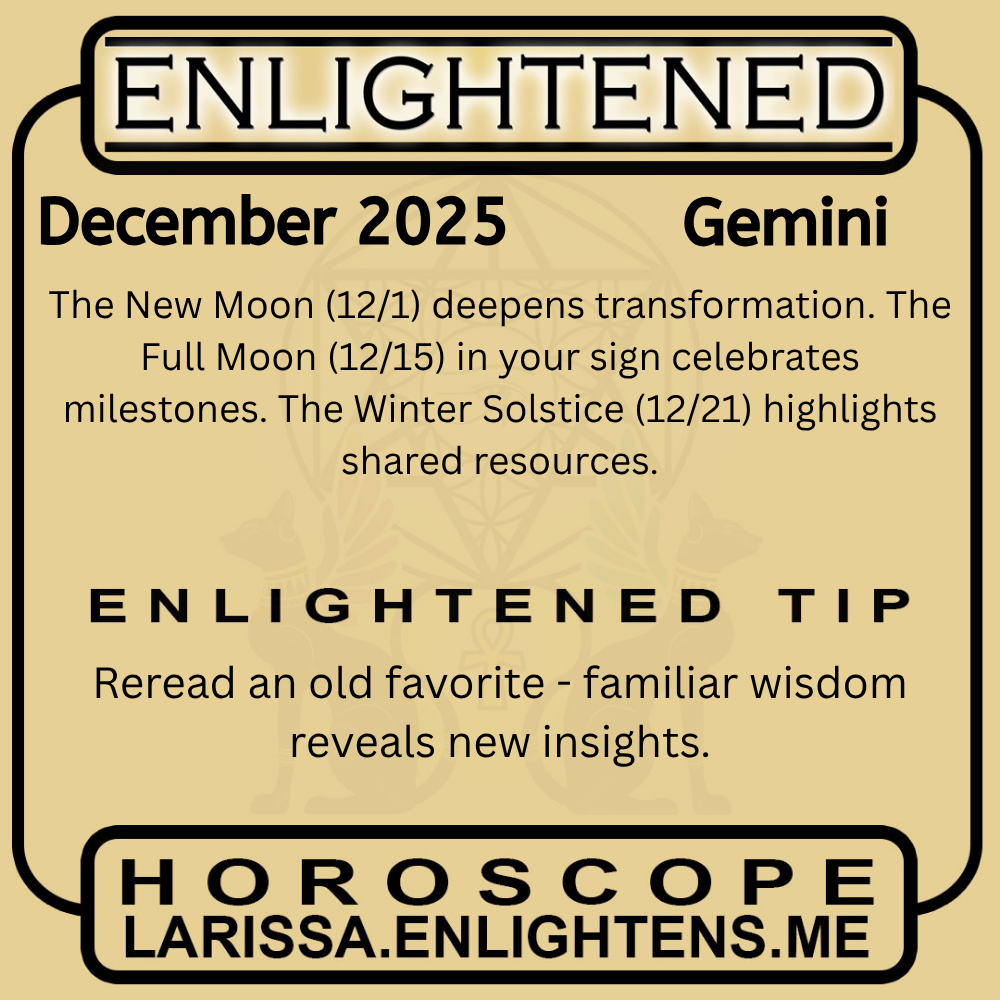
Gemini
The New Moon (12/1) deepens transformation. The Full Moon (12/15) in your sign celebrates milestones. The Winter Solstice (12/21) highlights shared resources.
Enlightened Tip: Reread an old favorite – familiar wisdom reveals new insights.
Cancer
The New Moon (12/1) refreshes partnerships. The Full Moon (12/15) reveals hidden truths. The Winter Solstice (12/21) shines on relationships.
Enlightened Tip: Bake something with your hands – tangible acts ground emotions.
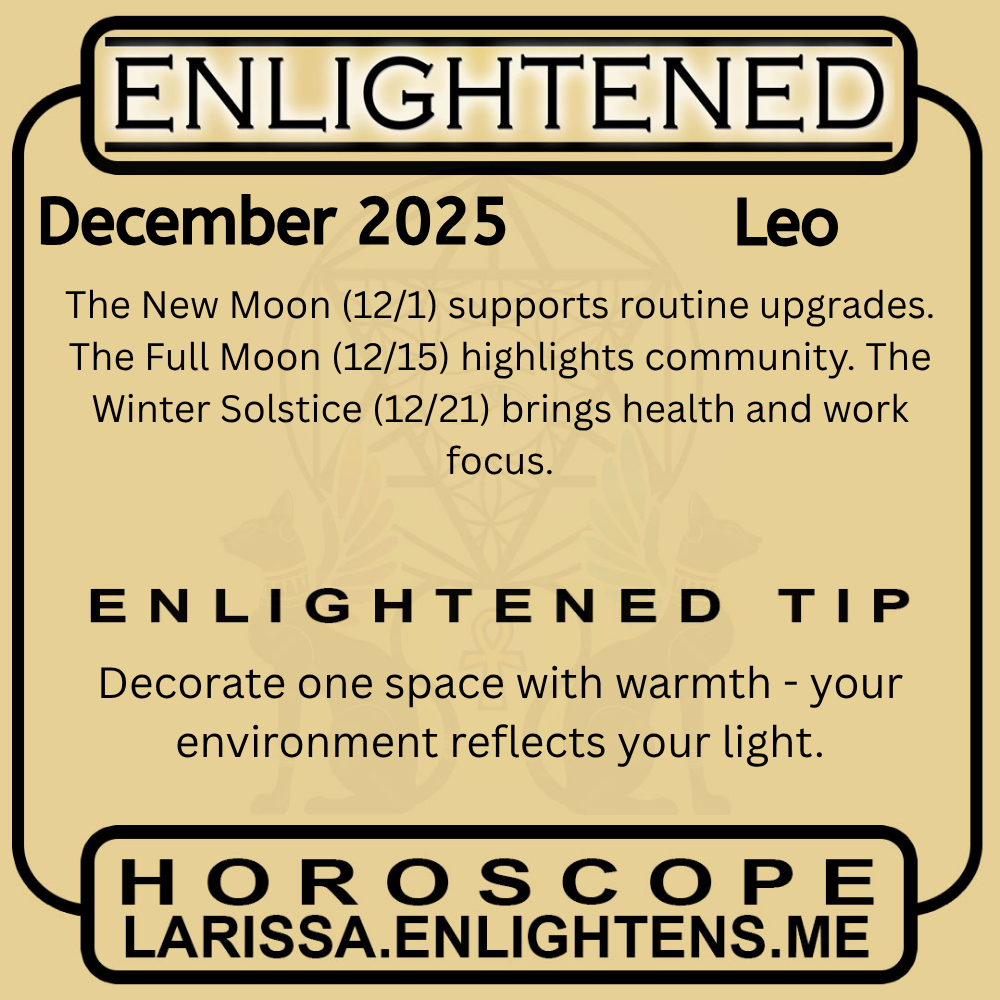
Leo
The New Moon (12/1) supports routine upgrades. The Full Moon (12/15) highlights community. The Winter Solstice (12/21) brings health and work focus.
Enlightened Tip: Decorate one space with warmth – your environment reflects your light.
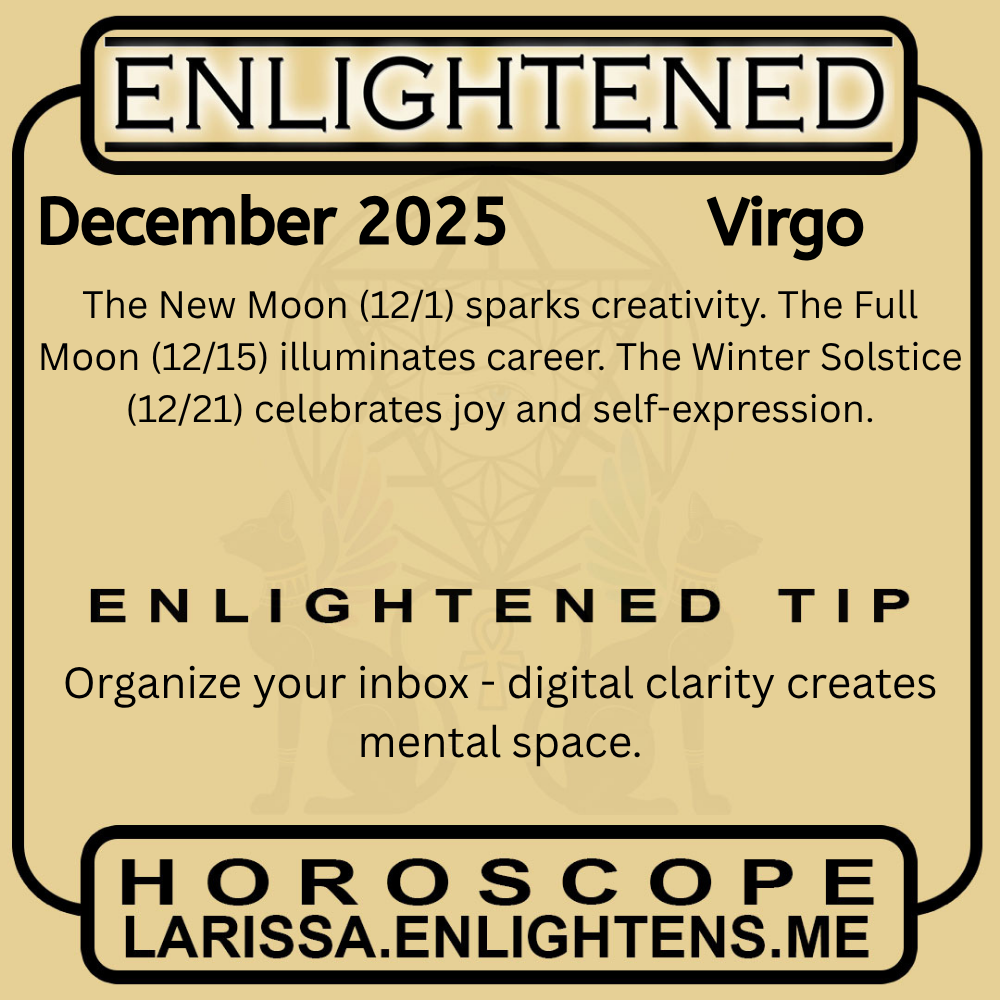
Virgo
The New Moon (12/1) sparks creativity. The Full Moon (12/15) illuminates career. The Winter Solstice (12/21) celebrates joy and self-expression.
Enlightened Tip: Organize your inbox – digital clarity creates mental space.
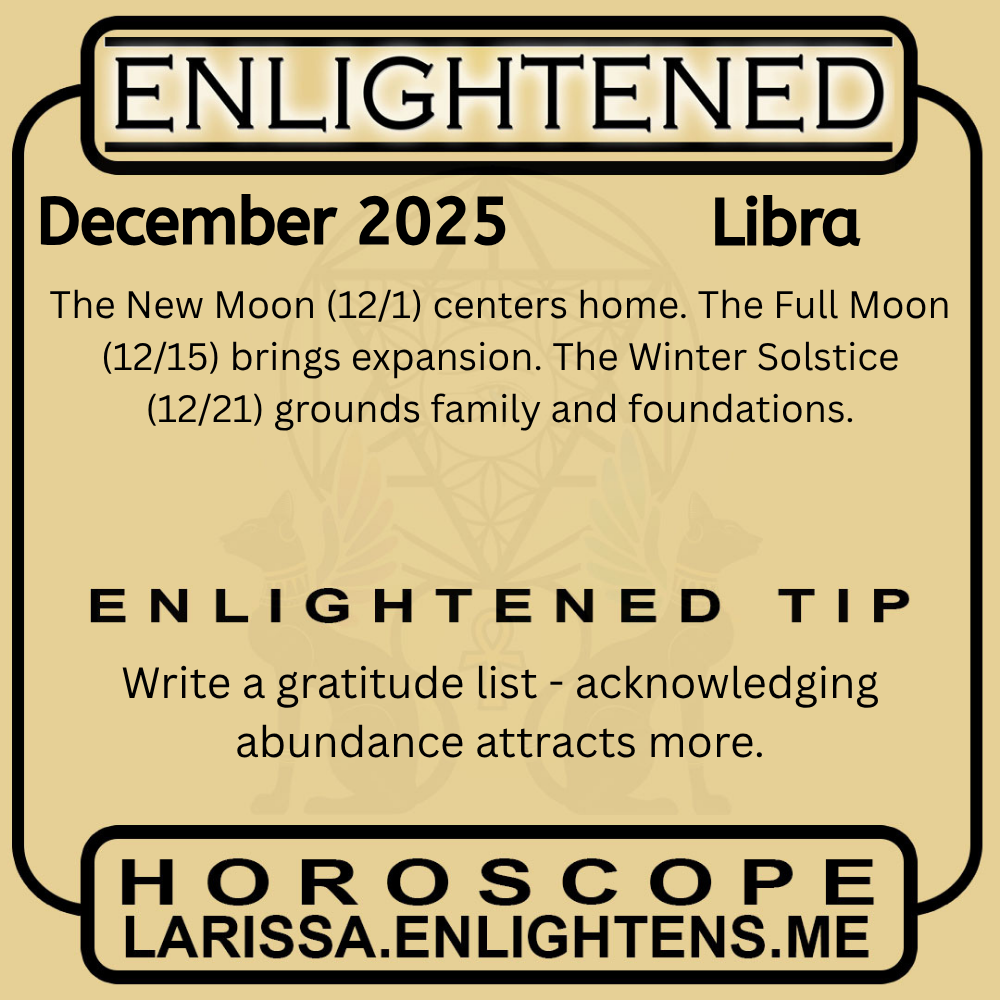
Libra
The New Moon (12/1) centers home. The Full Moon (12/15) brings expansion. The Winter Solstice (12/21) grounds family and foundations.
Enlightened Tip: Write a gratitude list – acknowledging abundance attracts more.
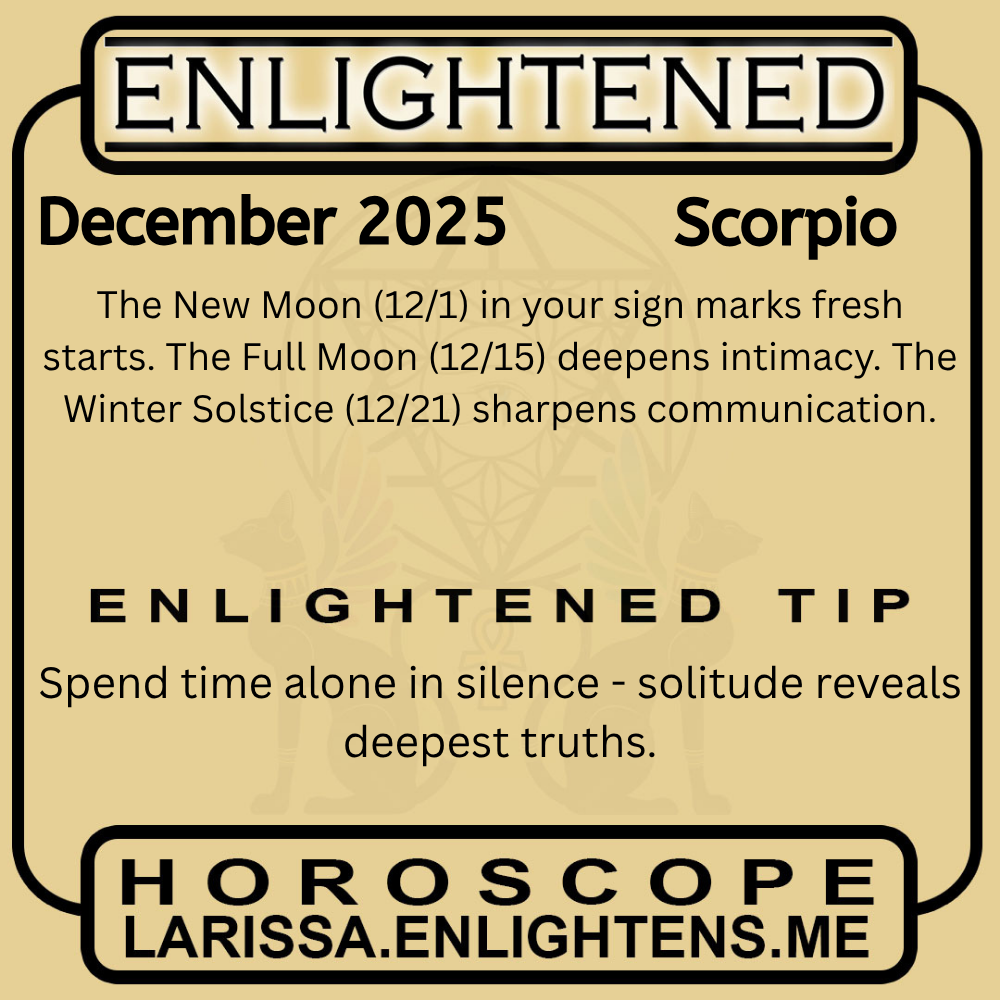
Scorpio
The New Moon (12/1) in your sign marks fresh starts. The Full Moon (12/15) deepens intimacy. The Winter Solstice (12/21) sharpens communication.
Enlightened Tip: Spend time alone in silence – solitude reveals deepest truths.
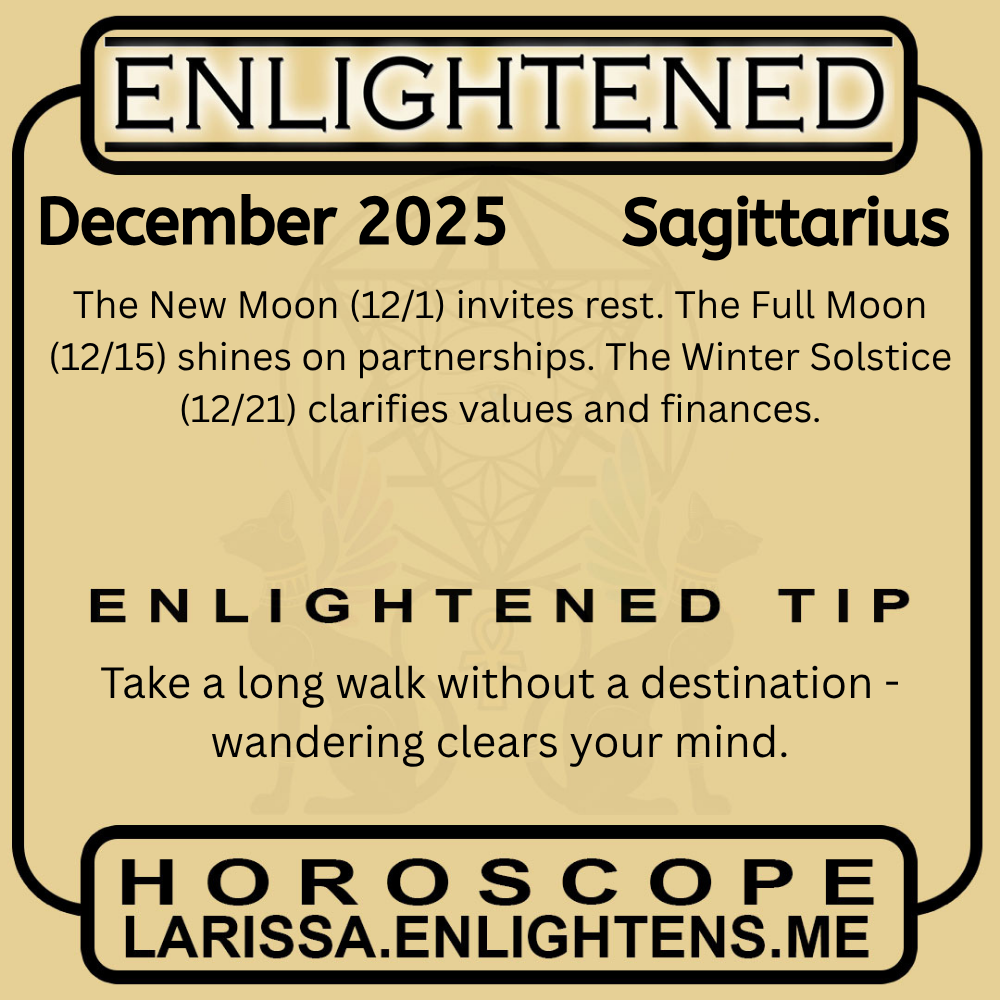
Sagittarius
The New Moon (12/1) invites rest. The Full Moon (12/15) shines on partnerships. The Winter Solstice (12/21) clarifies values and finances.
Enlightened Tip: Take a long walk without a destination – wandering clears your mind.
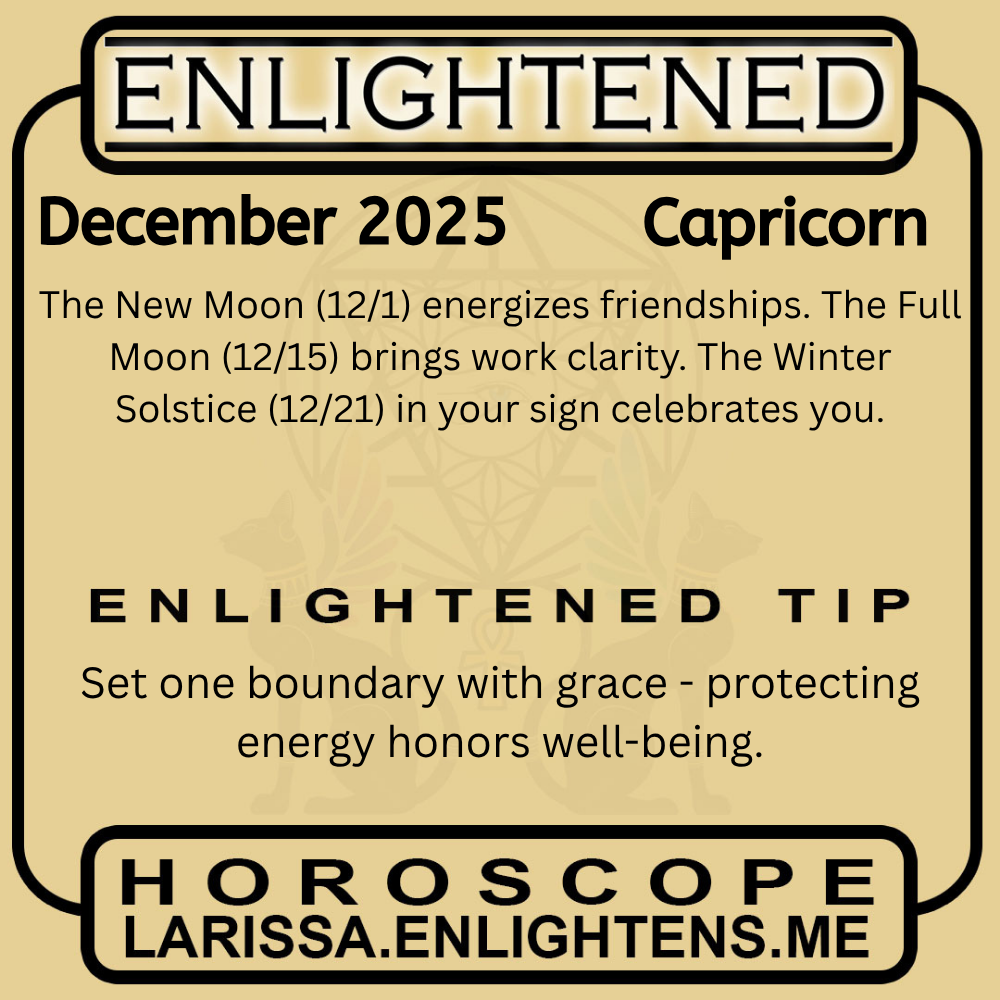
Capricorn
The New Moon (12/1) energizes friendships. The Full Moon (12/15) brings work clarity. The Winter Solstice (12/21) in your sign celebrates you.
Enlightened Tip: Set one boundary with grace – protecting energy honors well-being.
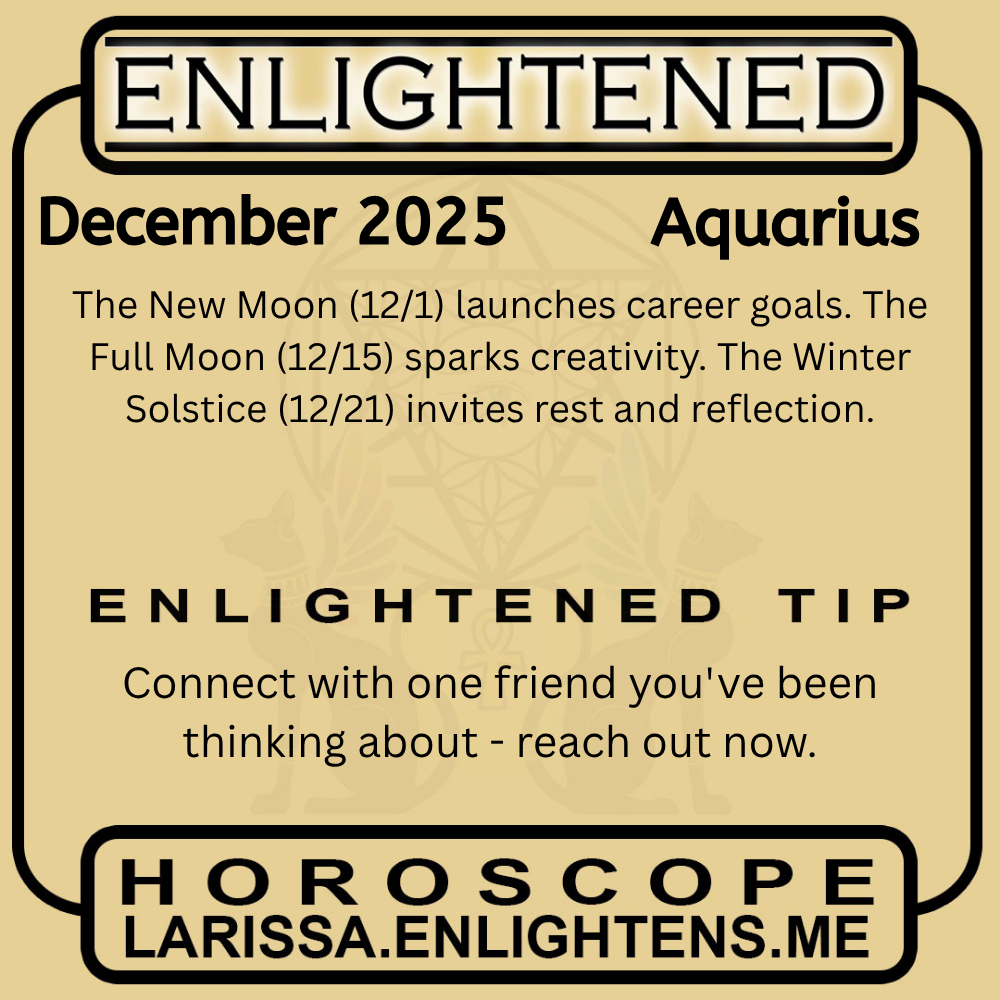
Aquarius
The New Moon (12/1) launches career goals. The Full Moon (12/15) sparks creativity. The Winter Solstice (12/21) invites rest and reflection.
Enlightened Tip: Connect with one friend you’ve been thinking about – reach out now.
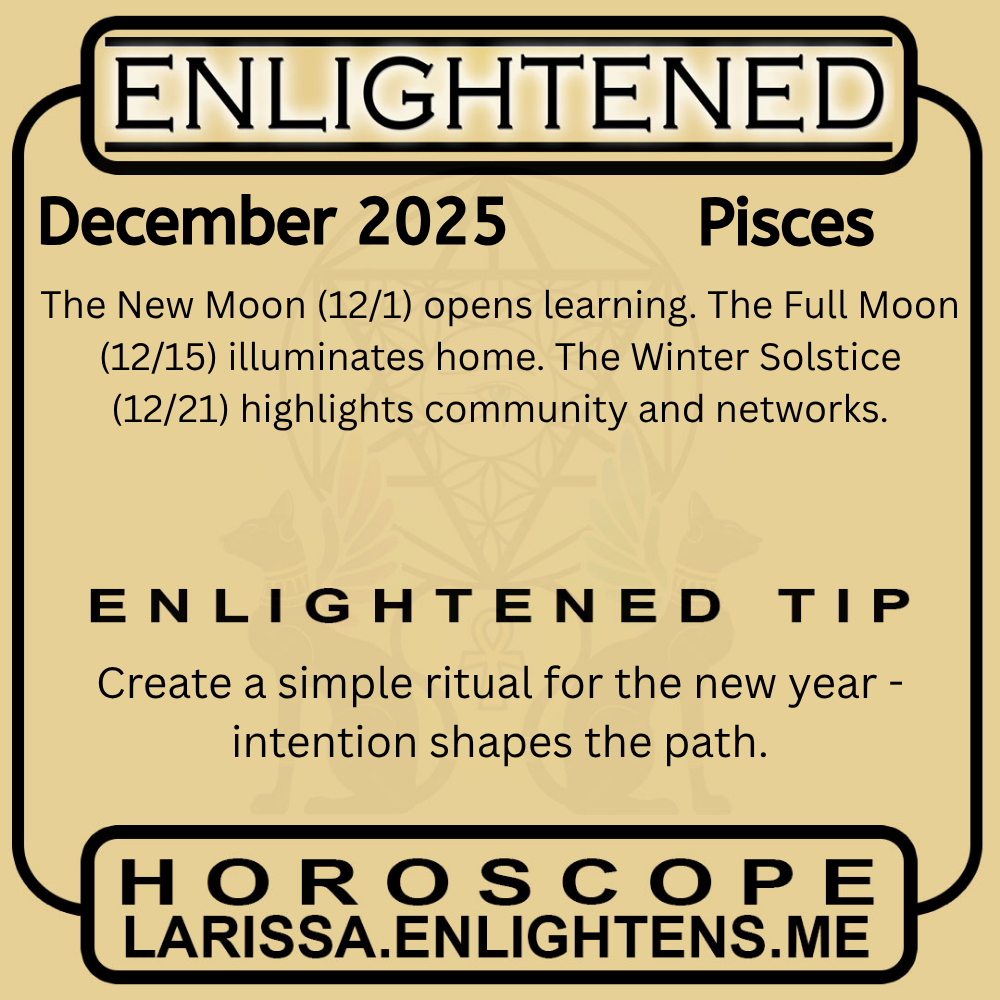
Pisces
The New Moon (12/1) opens learning. The Full Moon (12/15) illuminates home. The Winter Solstice (12/21) highlights community and networks.
Enlightened Tip: Create a simple ritual for the new year – intention shapes the path.
In our fast-paced world, mornings often feel like a frantic race against the clock. We wake up, immediately check our phones, rush through breakfast, and dive headfirst into the day’s demands, often feeling scattered and overwhelmed before we’ve even truly begun. This reactive start can set a tone of stress and anxiety that permeates the rest of our day. However, by intentionally crafting simple morning rituals, we have the power to reclaim our mornings, fostering a sense of calm, clarity, and groundedness that can profoundly impact our overall well-being. It’s about being proactive rather than reactive.
A morning ritual isn’t about adding more tasks to an already busy schedule; it’s about creating a sacred space at the beginning of your day to connect with yourself and set a positive intention. These rituals don’t need to be elaborate or time-consuming. Even five to ten minutes dedicated to a mindful practice can make a significant difference. The key is consistency and choosing activities that resonate with you, helping you transition from sleep to wakefulness with purpose and peace. This deliberate start helps to anchor you before the external world begins to pull at your attention.
When we start our day grounded, we are better equipped to handle whatever challenges arise. Instead of feeling like we’re constantly playing catch-up, we approach situations from a place of inner strength and stability. This groundedness allows for clearer decision-making, more patient interactions, and a greater capacity to navigate stress without being completely derailed. It’s like building a strong foundation for your day, ensuring that even if storms come, you have a solid base to stand upon. This internal resilience is invaluable in maintaining mental and emotional balance.
Consider the difference between waking up and immediately checking emails, which instantly puts you in a reactive mode, versus waking up and spending a few minutes in quiet reflection. The latter allows your own thoughts and intentions to surface first, giving you a sense of control and direction. This isn’t about avoiding responsibilities, but about creating a buffer zone where you can cultivate your inner state before engaging with the external world. It’s a gentle act of self-care that pays dividends throughout your entire day, enhancing your focus and reducing mental clutter.
Here are some simple morning rituals you can adopt to start your day grounded:
Hydrate Mindfully: Before anything else, drink a glass of water. As you do, notice the sensation of the water, and silently thank your body for sustaining you. This simple act rehydrates and signals a gentle start.
Five Minutes of Silence: Find a quiet spot and simply sit. You don’t need to meditate formally; just observe your breath, listen to the sounds around you, or simply be present without distraction. This creates mental space.
Gentle Movement: Stretch your body for a few minutes. This could be a few yoga poses, some simple stretches in bed, or a short walk. It helps to awaken your body and release any stiffness.
Set an Intention: Before fully engaging with your day, choose one positive intention or affirmation. It could be “Today, I will be patient” or “I will approach challenges with an open mind.” This guides your actions.
Incorporating simple morning rituals into your routine is a powerful act of self-care that can transform your entire day. It’s not about perfection, but about progress—finding what works for you and consistently showing up for yourself. By choosing to start your day grounded, you create a ripple effect of calm, focus, and positive energy that can help you navigate even the busiest of seasons with grace and resilience.
What small, intentional act can you commit to adding to your morning routine to feel more grounded?
Life often unfolds in seasons of varying intensity. There are periods of calm and reflection, and then there are the busy seasons—times when our schedules are packed, demands are high, and the to-do list seems endless. Whether it’s a demanding work project, the whirlwind of family commitments, or the hustle and bustle of the holidays, these busy periods can often leave us feeling drained, overwhelmed, and disconnected from the very joy we seek. Yet, it is precisely during these times that the practice of finding joy in small things becomes not just a pleasant diversion, but a vital lifeline for our well-being.
In the midst of a frantic pace, our minds tend to focus on the big picture—the ultimate goal, the looming deadline, the grand event. While ambition and planning are important, this constant forward-looking can cause us to miss the richness of the present moment. The beauty of seeking joy in small things is that it forces us to slow down, even if just for a fleeting second, and acknowledge the simple, often overlooked pleasures that are always available to us. It’s a conscious act of shifting our attention from the overwhelming whole to the manageable, delightful parts.
Consider the experience of a busy morning. Instead of rushing through your routine with a singular focus on getting out the door, imagine pausing to truly savor your first sip of coffee or tea. Notice its warmth, its aroma, its taste. Or perhaps, take a moment to appreciate the sunlight streaming through your window, the sound of birds outside, or the comfort of your favorite sweater. These are not grand gestures or monumental achievements; they are tiny pockets of sensory delight that, when acknowledged, can inject a surprising amount of peace and contentment into an otherwise hectic start to the day. Each small moment of appreciation acts as a mini-reset button for our nervous system.
This practice is particularly powerful because it cultivates a mindset of abundance rather than scarcity. When we are busy, it’s easy to feel like time, energy, and even joy are scarce resources. By intentionally seeking out and appreciating small joys, we train our brains to recognize that positive experiences are constantly available, regardless of our external circumstances. This reframing helps to combat feelings of deprivation and stress, reminding us that even in the most demanding periods, life still offers moments of beauty, comfort, and connection. It’s about finding the extraordinary in the ordinary.
To integrate finding joy in small things into your busy seasons, try these simple steps:
Mindful Pauses: Throughout your day, schedule brief, intentional pauses. It could be for 30 seconds or a minute. During this time, simply notice one small thing that brings you a sense of pleasure or peace.
Sensory Engagement: Actively engage your senses. Really taste your food, listen to a favorite song, feel the texture of something soft, or notice the colors around you. Immerse yourself fully in these small sensory experiences.
Gratitude for the Mundane: Express gratitude for the everyday things that make your life easier or more comfortable—a hot shower, a comfortable bed, reliable transportation, a working computer. These often go unnoticed.
Create a “Joy List”: Keep a running mental or physical list of small things that consistently bring you joy. Refer to it when you need a quick pick-me-up or a reminder of life’s simple pleasures.
Embracing the practice of finding joy in small things during busy seasons is not about adding another task to your already full plate; it’s about shifting your perspective and cultivating a deeper appreciation for the present moment. It’s a gentle reminder that even when life feels overwhelming, there is always beauty, comfort, and delight to be found, if only we take a moment to look. What small, often overlooked joy can you intentionally notice and appreciate today, even amidst your busiest moments?
For too long, we have been taught to view our bodies as machines, as a collection of separate parts that can be fixed and replaced when they break down. When we experience pain or discomfort, we are often encouraged to seek a quick fix, a pill or a procedure that will silence the symptoms without addressing the underlying cause. But there is a more ancient and a more effective way to approach healing, a way that sees the body as a whole and interconnected system. This is the holistic framework, a new paradigm for pain relief that is explored in depth in Serenity in Motion: A Holistic Approach to Lasting Relief.
Holistic health is not about treating symptoms; it is about treating the whole person. It is about recognizing that our physical, mental, emotional, and spiritual well-being are all intricately connected, and that true healing can only occur when we address all of these aspects of ourselves. It is a journey of self-discovery, of empowerment, and of reclaiming our innate capacity for healing.
The three pillars of holistic healing are the mind, the body, and the spirit. The mind is a powerful force that can either create health or create disease. Our thoughts, our beliefs, and our attitudes all have a profound impact on our physical well-being. By cultivating a positive and a resilient mindset, we can create a fertile ground for healing to occur. The body is our temple, the vessel that carries us through life. By nourishing our bodies with healthy food, by moving them in ways that feel good, and by giving them the rest and the care they need, we can create a strong and a vibrant foundation for our health. The spirit is the animating force of our lives, the source of our meaning, our purpose, and our connection to something larger than ourselves. By nurturing our spiritual well-being, we can tap into a deep well of resilience, of hope, and of healing.
In the holistic framework, you are not a passive recipient of care; you are an active participant in your own healing journey. You are the expert on your own body, and you have the power to make choices that will either support or undermine your health. By taking responsibility for your own well-being, you can move from a place of victimhood to a place of empowerment, and you can become the conscious creator of your own health.
Are you ready to embrace a new paradigm for pain relief? Download your free copy of Serenity in Motion: A Holistic Approach to Lasting Relief today at www.enlightens.info and learn to heal your body, your mind, and your spirit.
In the relentless pace of modern life, it’s easy to feel disconnected from our inner selves, swept away by external demands and anxieties. We often seek complex solutions for stress and unease, overlooking the profound power that lies within our own breath. Heart-centered breathing is a simple yet deeply transformative practice that invites us to reconnect with our core, fostering a sense of peace and cultivating an attitude of gratitude. It’s more than just a breathing exercise; it’s a pathway to emotional regulation and spiritual alignment.
At its essence, heart-centered breathing involves consciously directing your breath into and out of your heart space, often accompanied by an intention or affirmation. The concept is rooted in ancient wisdom traditions and is supported by modern science, which recognizes the powerful connection between our breath, heart rate variability, and emotional state. When we breathe slowly and deeply, especially with a focus on the heart, we activate the parasympathetic nervous system, which is responsible for the body’s ‘rest and digest’ response. This counteracts the ‘fight or flight’ response triggered by stress, bringing about a state of calm and coherence.
The practice typically begins by finding a comfortable position, gently closing your eyes, and bringing your awareness to your heart center-the area in the middle of your chest. As you inhale, you might visualize drawing in feelings of peace, calm, or love, allowing them to fill your heart space. As you exhale, you can consciously release tension, worry, or any feelings of negativity, often accompanied by an intention of gratitude. This rhythmic exchange of breath and intention creates a powerful energetic circuit, soothing the nervous system and opening the heart to positive emotions.
One of the most beautiful aspects of heart-centered breathing is its ability to cultivate gratitude. By consciously exhaling gratitude, we reinforce an appreciation for life, for the breath itself, and for the myriad blessings, big and small, that surround us. This practice shifts our focus from what might be lacking to what is abundant, fostering a more positive and resilient mindset. It reminds us that even in challenging moments, there is always something to be grateful for, whether it’s the simple act of breathing or the unwavering beat of our own heart.
To integrate heart-centered breathing into your daily routine, consider these steps:
Find a Quiet Space: Choose a time and place where you won’t be disturbed, even if it’s just for five minutes. Sit comfortably with your spine erect but relaxed.
Focus on Your Heart: Gently place one or both hands over your heart center. Close your eyes or soften your gaze and bring your awareness to this area.
Breathe Deeply: Begin to breathe slowly and deeply, imagining your breath flowing in and out of your heart. Inhale for a count of four, hold for one, exhale for a count of six.
Inhale Peace, Exhale Gratitude: As you inhale, silently affirm “I inhale peace” or “I inhale calm.” As you exhale, silently affirm “I exhale gratitude” or “I release tension with gratitude.”
Practice Regularly: Even a few minutes of this practice daily can make a significant difference in your emotional state and overall well-being. You can also use it in moments of stress.
Heart-centered breathing is a profound reminder that the most powerful tools for peace and gratitude reside within us. By consciously engaging with our breath and heart, we can navigate life’s challenges with greater equanimity, cultivate a deeper sense of appreciation, and live from a place of open-hearted presence.
How might a regular practice of heart-centered breathing transform your experience of peace and gratitude in your daily life?
The holiday season, often painted with images of joy and togetherness, can paradoxically be one of the most stressful times of the year for many families. The pressure to create perfect memories, navigate complex family dynamics, manage financial strains, and juggle packed schedules can leave even the most resilient individuals feeling overwhelmed. Amidst the festive chaos, a simple yet profound practice—mindfulness—offers a powerful pathway to navigating these challenges with greater ease and presence. It’s not about eliminating stress entirely, but about changing our relationship with it.
Mindfulness, at its heart, is the practice of paying attention to the present moment without judgment. It involves observing our thoughts, feelings, and bodily sensations as they arise, rather than getting swept away by them. During the holidays, this can be particularly beneficial. Instead of reacting impulsively to a critical comment from a relative or spiraling into anxiety about an unfinished to-do list, mindfulness allows us to pause, take a breath, and choose a more intentional response. This pause creates a vital space between stimulus and reaction, empowering us to act from a place of calm rather than stress.
Consider a common holiday scenario: a family gathering where old tensions resurface. Without mindfulness, you might find yourself automatically falling into old patterns of argument or withdrawal. With mindfulness, however, you can observe the rising irritation or defensiveness within you. You might notice the tightening in your stomach or the quickening of your breath. By simply acknowledging these sensations without judgment, you create a distance from them. This awareness allows you to choose to respond with compassion, or to simply listen without engaging, rather than escalating the conflict. It’s about recognizing that while you can’t control others’ behavior, you can control your own reaction.
Another significant source of holiday stress is the relentless pace and the pressure to do everything. Mindfulness encourages us to slow down and savor individual moments. Instead of rushing through gift-wrapping, meal preparation, or even conversations, we can bring our full attention to each activity. This might mean truly tasting the holiday meal, fully listening to a child’s story, or feeling the texture of a gift as you wrap it. By engaging all our senses and being fully present, we transform mundane tasks into opportunities for joy and connection, reducing the feeling of being constantly rushed and fragmented.
Here are some practical mindfulness practices to help navigate holiday stress:
Mindful Breathing: When you feel overwhelmed, take a few deep breaths, focusing solely on the sensation of the air entering and leaving your body. This simple act can quickly calm your nervous system.
Body Scan Meditation: Take a few minutes to lie down or sit comfortably and bring your attention to different parts of your body, noticing any sensations without trying to change them. This helps to release tension.
Mindful Eating: During holiday meals, eat slowly, savoring each bite. Notice the flavors, textures, and aromas. This can prevent overeating and enhance enjoyment.
One-Minute Mindfulness: Set an alarm for a few times a day. When it rings, stop what you’re doing and simply observe your surroundings, your breath, or your thoughts for one minute.
By integrating mindfulness into your holiday season, you can transform potential sources of stress into opportunities for deeper connection, peace, and genuine joy. It’s a gift you give yourself and your family-the gift of presence.
How might embracing mindfulness this holiday season change your experience of family gatherings and festive obligations?
Life, with its unpredictable twists and turns, often presents us with moments of stress and overwhelm. Deadlines loom, relationships fray, and the weight of daily responsibilities can feel crushing. In these challenging times, it’s natural to feel consumed by negativity, focusing on what’s going wrong rather than what’s going right. However, there’s a simple yet profound practice that can act as a powerful antidote to stress: gratitude. Cultivating gratitude isn’t about ignoring your problems; it’s about consciously choosing to acknowledge the good, thereby fundamentally altering your perspective and enhancing your ability to cope.
When stress takes hold, our brains tend to enter a state of hyper-focus on threats and deficiencies. This evolutionary response, while useful for survival in ancient times, can be detrimental in our modern lives, leading to chronic anxiety and a diminished sense of well-being. Gratitude intervenes in this process by actively redirecting our attention. By intentionally seeking out things to be thankful for, we engage the prefrontal cortex, the part of the brain responsible for rational thought and emotional regulation. This shift helps to calm the amygdala, the brain’s fear center, reducing the physiological symptoms of stress and allowing for a more balanced emotional state.
Consider a typical stressful scenario: you’re facing a mountain of work, and the pressure is immense. Your initial reaction might be to feel overwhelmed, frustrated, or even resentful. However, if you pause and intentionally practice gratitude, your perspective can begin to shift. Instead of dwelling on the sheer volume of tasks, you might acknowledge the opportunity to learn new skills, the trust your colleagues place in you, or even the comfort of your workspace. This isn’t to say the work disappears, but your emotional response to it changes. The burden feels lighter, and you might even find a renewed sense of purpose or motivation.
Gratitude also helps us to reframe challenges as opportunities for growth. When we are grateful for the lessons learned from difficult experiences, we transform adversity into wisdom. A setback at work, for instance, can be viewed not just as a failure, but as a chance to refine your approach, develop resilience, or discover a new path. This reframing is crucial for mental health, as it prevents us from getting stuck in a victim mentality and empowers us to take proactive steps towards resolution. It fosters a sense of agency, reminding us that even in the midst of stress, we have the capacity to choose our response.
Here are some practical ways to integrate gratitude into your stressful moments:
The Three Good Things Exercise: At the end of each day, list three good things that happened, no matter how small. Briefly explain why they happened. This trains your brain to scan for positives.
Gratitude Breaks: When you feel stress mounting, take a 60-second gratitude break. Close your eyes, take a few deep breaths, and bring to mind three things you are grateful for in that exact moment.
Express Appreciation: Reach out to someone who has helped you or made your day a little brighter. A simple thank you can not only boost their spirits but also reinforce your own sense of gratitude.
Mindful Observation: Pay attention to the simple pleasures around you-the warmth of your coffee, the sound of birds, the comfort of your clothes. These small observations can ground you.
Gratitude is a powerful tool for navigating the complexities of a stressful life. It doesn’t erase difficulties, but it provides a lens through which we can view them with greater clarity, resilience, and even a touch of grace. By consciously cultivating an attitude of thankfulness, we empower ourselves to shift from a state of overwhelm to one of appreciation, finding peace and strength even amidst the storm.
What small shift in perspective could gratitude offer you today, even in the face of your biggest challenge?